Early commerce developments
Trading in one way or another has always been an integral part of human society, as for example can be seen in the contents of the many pre-historic burial sites. The contents of the Celtic grave of the ‘king of Oss’ indicated a flourishing salt trade between people in our region and the people in what is now southern Germany.
The Roman roads, built for military purpose, were as soon as they were established also used for commercial activities and this infrastructure remained an important transport network for later merchants to well into modern times.
Trade of course had been flourishing around the Mediterranean for some eight millennia, which of course had become an integral part of the way of life in this region. The lack of raw materials in this region had seen the Italians looking north for wool, salt and timber that some of that was again exported to the Middle East and North Africa.
When all of this happened around the Mediterranean, northern Europe was still a non existing economic backwater. After the capital of the Roman Empire was moved from Rome to Constantinople (325) the centre of European trade moved further to the east. With the further decline of the Roman Empire in the west also the limited trade that had created increased wealth in north-western Europe collapsed. The cattle trade in Oss came to an end – partly also because of climatic changes that saw large parts of the Low Countries flooded in the middle of the 3rd century.
One of the first political activities to again stimulate trade in north-western Europe can be contributed to the Merovingian King Dagobert, he established, around 650, the fair at St Denis near Paris.
The fair that took place at the festival of St Denis lead to the establishment of one of the first trading places in northern Europe. The original market was most likely around winter supplies.
Its success is clear, the market was still flourishing some 400 year later, by that time it had become an important link in ‘Champagne’ one of four trading circles that by that had developed in north-western Europe.
These early trading activities were still based on the trade routes that were in place in Roman times. Roman roads but in particular the river systems as they were used than was again the main trading channel. They were used from the north were the wool from England entered the continent in Flanders and in the south were goods from the Mediterranean moved northwards.
In the Carolingian period Frisia hosted the largest trading town of north-western Europe, Dorestad – centrally situated in the meandering river-lands dominated by the Rhine and Maas. Its leading position was taken over by Tiel, Deventer in the 10th century and in the 11th century also Utrecht emerged, who at that time was the largest trading centre of the northern Low Countries
Dorestad largest trading city in north-western Europe
By the 7th century population started to occur again after the climate changes during the Roman period. River ports, sea ports and junctions of roads all became key trading places that started to shape the commercial activities in our region. On these rivers the Frisii had already been active as traders since the 6th and early 7th century and Dorestad became the most important trading city of north-western Europe. The Frisian seaport of Staveren (Stavoren) was already more than a millennium old when it became another prominent trading place in the Low Countries during 9th and 10th centuries.
Dorestad was ideally positioned between the Franks in the south and the Frisii in the north. At a very strategic spot at the crossing of the rivers Rijn and Lek, a position already recognised by the Romans who had built a fort – Levafanum – at this spot. The river structure had created a sandy beach which allowed for the position of river port and a trading settlement. Similar river shore settlements emerged further up the river system such as Mainz, Worms, Cologne and Strasbourg, most of them in the shadow of the remnant of old Roman fortresses. (An old name is also Dorestade, stade = ascending river shore).
While the Frisians were the masters of the river systems however it wasn’t until the Franks took control of the ruins of the Roman fortress and the small trading community that it started to flourish. They hauled passing ships onto the river beach to inspect (and tax) them and as thus controlling the trade over the river system. Trade in this time was mainly in luxurious goods and this rather lucrative.
Revived by new security and privileges from the Merovingian and Carolingian rulers they attracted new merchants. From Dorestad they could go directly north through no longer existing river connecting the Maas and the Rhone – the Zoel – to the Middle Sea (Ijsselmeer) and from here to Scandinavia and the Baltic. To the west they traveled to Britain and along the cost to Flanders and France and most likely beyond. To the east they had connections with the Rhineland and from her also south to Italy. They became the commercial intermediaries for all the trading communities north of the Alps. There were Frisian merchants and intermediaries stationed in all of the major trading towns of those days York, London, Quentovic in West Francia, Ribe, and Hedeby (Haithabu) on the Danish Schleswig isthmus, Kaupang in the Oslo fjord and Birka in Sweden. I saw a large scale model of Birka in the National museum in Stockholm, Sweden in early 2007. The structure of the town reminded me very much of the reconstruction plans of Dorestad. There are also suggestions that these Scandinavian trading towns were built based on Dorestad. Coins minted in Hedeby are also modeled on those minted in Dorestad.
It were often the Frisian traders in those overseas cities that were the intermediates between to local merchants and those in Dorestad and elsewhere. The importance of this city was also seen in the fact that the missionary Ansgar report that many inhabitants of Hedeby and Birka had been baptised in Dorestad. [x. Noormannen in het Rivierland, Luit van der Tuuk, Omniboek, 2009, p52]
The conquering of Frisia by the Franks started in all earnest in the late 7th century when the Frisians king Radbod was defeated. The Franks took control of Dorestad however, the situation remained volatile with both Franks and Frisians alternately taking control of the city during the next three decennia. In the end all Frisians were expelled them from the area. But while the Franks now ruled the place, their remained a large Frisian group of merchants in the city. As a matter of fact indications are that the Frisians remained the key traders and formed by far the largest trading community in Dorestad and also later in Tiel.
Nevertheless the city was most prosperous under Frankish control, when it received security and protection as well as privileges and other support from both the Emperor and the Church. It is estimated that it had between 2,500 and 3,500 inhabitants during the reign of Charlemagne. The golden age of Dorestad was between 750 and 850.
It now even more so was able to attract traders from Britain and many other countries as far as the Mediterranean, North Africa, Byzantium and Asia. Equally these merchant communities established their own representations in Dorestad and later on in Tiel. Under Frankish rule, there were special privileges given to these overseas traders which gave them a great proportion of freedom. This greatly increased the attractiveness and importance of Dorestad as an international trading city.
The city now also started to attract nobility (secular and ecclesiastical) from East Francia, Utrecht and Cologne. They all established properties and assisted in the further developments of the city and its surroundings. The place featured several churches, however, indications are that religion was not the highest priority here as both Boniface and Charlemagne’s key adviser Alcuin bitterly complain about the moral state of the community, Alpertus of Metz later on wrote a similar report from Tiel, however, this city wasn’t perhaps as ‘bad’ as Dorestad, it had more churches and monasteries to keep an watchful eye over its inhabitants, the religious cult of Saint Walburga also attracted pilgrims and other pious people to the town. [x. Noormannen in het Rivierland, Luit van der Tuuk, Omniboek, 2009]
Serious changes started to occur when Dorestad was conquered by the Vikings and Dorestad became their capital in the Low Countries. Frisia (including Holland and Zeeland) were now under the control of the Danish Vikings whose rulers became feudal rulers under the Emperor of Lotharinghia and later the East Francia King. This brought the town in even closer contact with other Viking cities such as Haithabu and Ribe. However, with constant internal feuds, piracy and wars from competing Viking groups, they did more bad than good to Dorestad as it resulted in the East Francia rulers to strengthen their trading cities such as Tiel and Deventer who started to out-compete Dorestad.
In the end it was the political situation in Europe that provided the final death-nail. After the Treaty of Verdun in 834 the Carolingian Empire was split and most of Frisia ended up in Lotharinghia. However, this was wedged between the more powerful East and West Francia territories. The grandchildren of Charlemagne and their descendants were constantly at war with each other and Lotharinghia became the main victim of all of this. As mentioned above this was when the towns under more direct East Francia control were able to out-compete Dorestad and most of its merchants basically packed up and moved to Tiel.
While Dorestad went into decline it never totally depopulated and the current city of Wijk by Duurstude evolved from the down town area (Benedenstad) of the old trading centre. Its oldest part up town, around the Roman fortification (Bovenstad) disappeared in the ever changing river system.
The rise and fall of Tiel
Even after the Treat of Meerssen in 877, that gave East Francia control over most of Frisia, the new rulers were unable to take effective control of Dorestad. Perhaps in what was an early form of economic warfare they started to use privileges and other incentive to get the merchants from Dorestad to the region that was firmly under their control and in particular to Tiel, which was only 10 kms away and so most merchants would have been very familiar with the place and also to Deventer. They were very successful with this strategy and within a decade or so these cities started to taken over the leading trading position and with the decline of Dorestad also the power of Vikings declined and they basically disappeared from the scene in the river region. The region however, stayed volatile because it remained the boarder between East and West Francia and an important but increasingly weak Bishopric and a few centuries later became the battle field between the emerging new regional powers of Gelre and Brabant.
These special privileges were official confirmed in a charter signed in Nijmegen by King Zwentibold in 896. The city received the privilege of coinage as well as toll right. During the 10th and 11th centuries Tiel was the largest trading city in the Northern Low Countries. After coins from Cologne those of Tiel are the most common in north-western Europe during the first part of the 11th century. Their merchants were now operating well beyond the river system and also dominated the coastal trade in the North Sea and the Baltic Sea.
While its design and structure was clearly based on Dorestad, it became a more modern port, while in Dorestad ships were still hauled onto the beach, in Tiel the wharves were far enough out into the river to allow – the increasingly larger ships – to properly moor. The city became the major intermediate in the trade on the river systems in north-western Europe and trade to and from England; Deventer specialised itself more northwards trading with Scandinavia and the Baltic regions. Also here overseas traders established themselves and their are indications that they combined themselves in guilds and as such created their own culture, events and other activities, all under the privileges given to them by both the secular and ecclesiastical rulers.
Archaeological evidence indicates that the town was mainly a merchant one, rather than an industrial one, there was of course some small scale home-crafts but no indication of any large scale activity its main function was that of a transit port. In comparison to Dorestad it is interesting to note that there was less agriculture activity in the merchant settlement of Tiel.
The city also had an important religious function and as mentioned above it attracted more church investments which assisted in the development of the city. It also had relics of St Walburga, which attracted pilgrims to the city as well (see Teisterband).
In one way or another Tiel was also well known enough to get a mentioning in the legend of St Ursula who with her 11,000 virgins went on a pilgrimage to Rome and stopped in Tiel on their way, in order to get food-supplies from the market.
Tiel went into decline once cities such as Dordrecht and Vlaardingen started to emerge. While the full effects didn’t occur till later-on in the 11th century. The first signs started already shortly after 1000 when Count Dirk III of Holland at Dordrecht started an ‘illegal’ toll that merchant from Tiel had to pay on their way to England. This led to two battles between the Emperor and his allies and the Count of Holland. It became a total disaster for the Emperor and his allies.
In this period – during the reign of the powerful King Bluetooth – the Vikings were suddenly and totally unexpected back and in 1002 plundered Tiel. They came back with a large fleet of 90 ships with perhaps as many as 3000 men in 1009 but left the city alone on the promise they were allowed to pass through. Most likely these were fleets of Vikings on their way to or from England, using the safer river system rather than the more treasonous sea to travel to and from Denmark. By making a slight detour via Tiel they could raid the supplies stored in the warehouses at the port. This was the last time that Viking raiders visited the Low Countries. [x. Noormannen in het Rivierland, Luit van der Tuuk, Omniboek, 2009, p101-116]
However, in the end it was competition that saw the demise of Tiel. Holland became the leading political force in the region. As business people do, Frisian merchants packed up again and this this moved to these new trading towns. However, unlike Dorestad Tiel was able to hang on to a minor regional trading position and be it on a much smaller scale was able to survive. In the 13th and 14th centuries its strategic position brought it back in the limelight when it became an important city in the wars between Gelre and Brabant.
The end of the Frisian trade domination
By this time Frisians were very well integrated in all of the trading cities along the river system such as the new upcoming river ports of Dordrecht and Vlaardingen but also the already more established river ports of Kampen, Zuthpen,Harderwijk, Staveren, Zwolle, Groningen and Deventer.
However, at this stage the Hanse – with the upcoming Hanse city Lübeck and other Wend cities along the Baltic coast – became the dominant force and wanted to submit the independent Frisians to their trading monopoly.
Increasingly they were able to take over the leading trading position of the Frisians, this led in 1284-1285 to the first trading wars between the two groups. However, there was no unity among the Frisian cities and the river cities all supported Lübeck [2. Hanno Brand and Egge Knol, Koggen, Koopliedenen Kantoren, 2009].
At the same time totally new trading cities in Holland started to emerge such as Dordrecht and Vlaardingen, they fought for their own independence – and had famously been able to defeat the Emperor in the Battle of Vlaardingen in 1018. Ever since that time they had been able to develop more or less independent from the control of the Emperor.
The more eastern Dutch river cities, together with Baltic cities, were all firmly part of the Holy Roman Empire and they received significant support from the emperor to stimulate their trade. This made them choose to support the Hanse rather than the Dutch ‘rebels’. Support from the river cities was actively thought by the Hanse in their quest to ward of competition from the Hollanders.
However, several centuries later it would be the Hollanders would be able to dethrone the Hanse cities. One could argue that this was a revenge of the Frisians however, by this time they were well and truly integrated in the larger conglomerations of Holland and Zeeland cities and made up approx 20% of the overall trade from the Low Countries.
Deventer
Staying in the Low Countries, in the 14th and 15th centuries Deventer had well and truely taken over from Tiel, it had become the largest inter-regional trading centre between the eastern cities, especially those along the Rhine and Weser and the trading cities in Holland in the west.
Deventer had already started to flourish after the decline of Dorestad and gained prominence ever since. They were first mentioned as a major river port in 887. Merchants from Deventer were also mentioned in the famous imperial toll register of Koblenz in the 11th century. On the Danish island of Schonen – were in the 14th century the most important herring markets took place – Deventer shared its own vitte (trading settlements in Hanse cities) with Kampen. In other places it shared vittes with Staveren ( Stavoren). It also had the largest fleet that sailed to the stock-fish market in Bergen, Norway.
Regional European Trade Circles
The Frisian traders participated and often dominated in the wider regional medieval trade circles. They key one for them being the circle in Flanders (Ypres, Bruges, Mesen, Lille and Torhout) and the one around the Rhine region (Utrecht, Duisburg, Aachen and Cologne). There was another one in England. The Champagne, east of Paris, was the most central one of these circles in the early phase of the commercial revolution, attracting merchants from as far as Byzantium, the Mediterranean region and the Arab world. During the 12th and 13th centuries it became also one of the first international centers were the Frisian merchants of the Low Countries met their counterparts from Northern Italy. However, these regional circles lost their importance once direct north-south trade routes between the Low Countries and the cities in south Germany (Augsburg, Nurnburg) and the cities in northern Italy were established.
Another important trading circle was added in Brabant (Antwerp, Bergen op Zoom). Later on, trading routes from here linked Amsterdam in the north and via Deventer the Rhine region in the east as well as to the other regions in England and France.
Utrecht was the other important trading city and perhaps the largest of the four during the 11th century. Its history is covered separately.
One of the first trading cooperatives started in Flanders around 1200 between textile merchants in order to better negotiate trading arrangements with the King of England in relation to the import and the price of wool
Economic development
The dynamics of the commercial revolution of the 12th and 13th centuries also created a new mentality that of chasing profits. This brought the merchants in conflict with the church. People only had one duty on earth and that was to prepare themselves for a blessed after life. They had to follow in the footsteps of Jesus, looking after the less fortunate and themselves live in poverty. The church categorically rejected the gathering of earthly possessions and therefore rejected money lending and making profit. However, they were unable the tsunami of change and during the 13th century they adjusted their position, for the first time in history they also accepted that people were allowed to also on earth pursue happiness. Money lending rules were also relaxed and in general this stimulated further economic development and trade.
In the Early Middle Ages, trading volume was rather limited with the ships not being able to transport much more that 10 tonnes. However, by the 11th century they dominated the trade along the costs of the North Sea and the Baltic Sea mainly operating from Stavoren. After the Frisians were defeated during a sea battle in Baltic by Lübeck and the other the Wendish cities (Greifswald, Rostock,Wismar, Stettin and Lünenburg) the Hanse started to take over the role of the Frisian. The same happened with the early medieval trading cities in Scandinavia namely Birka. Frisian products however, remained popular for another few centuries when it was overtaken by products from Flanders and Italy.
The concept of the ‘Peace of God’ and the ‘Peace of the King’ from the Carolingian period which was aimed at stopping the many war lords that still operated within the Merovingian and Carolingian time was further developed into the ‘Peace of the City’ and market peace. ‘Peace’ meant freedom as well as the provision of safe travel and trading conduct during the market days. Toll levies were often abolished or lowered during such periods in order to attract merchants to the town. Market rights and trading privileges in relation to mills, weigh-houses and hall-marks became part of the City Rights which were annually approved by the king or the local landlord.
There is no doubt that the crusades with brought the Franks in contact with the Mediterranean has been of great importance to the development of trade in northern Europe.
However, there is also evidence that places such as Antwerp and Ghent started to develop its own trading skills in the 10th century. Flemish merchant were already trading in England around that time. Already in the 13th century cities such as Ghent, Ypres and Bruges were digging canals to improve their trading facilities.
Pilgrimages and crusades also saw the arrival of tourism which also, be it in a modest way, added to the economic growth of the period.
Interestingly trade also led to a more or less new system next to and often separate from those followed by the many landlords, theirs was ruled by capitalistic principles rather that by feudal obligations. Prosperity was more driven by new commerce opportunities rather than by the government provided (or not) by the nobility.
However, for most of Europe subsistence continued to well into the 19th century. The Low Countries formed an exception to that rule.
The Commercial Revolution of northern Europe
While at the turn of the millennium the society could still be dived in three classes: warriors, priests and farmers, three hundred years later a whole range of new categories was added to society: lawyers, clerks, teachers, merchants, students, etc.
The end of the 13th century saw an end to the increase of the agriculture expansion, climate change but also other elements played a role in this. The period between 1350 and 1500 was a period of transition. While there was enormous poverty, death, illnesses and general misery on the one side at the same time we see the creation of enormous wealth and a large number of administrative, agriculture and commercial innovations.
An interesting observation here is that slowly but surely the superiority of the merchants, based on economic power started to win from the ‘armed’ power of the counts and the administrative powers of the cities. The merchants became the driving force behind the growth and the wealth of the cities and an early form of capitalism started to emerge.
This would also not have been possible without the protection offered by the above mentioned Peace of God and the Peace of the King. Merchants often received privileges from the rulers giving them at least a certain guarantee of security while travelling through the region and beyond.
The term ‘commercial revolution’ was first coined by historian R.S Lopez. This revolution first started in another fringe area of the super powers. These regions were often left alone, as they were to far away from the centres of powers in France and Germany. It were in these areas where cities were able to develop into city states. This happened in particular in Flanders and Brabant. The rest of the Low Countries followed soon. However, it wasn’t until 17th and 18th century before some of these new agriculture innovations spread into England, France even followed later.
Various social and economic developments and innovations – that started to flourish around the turn of the first millennium – also fuelled this commercial revolution.

- Watermill at Fontenay
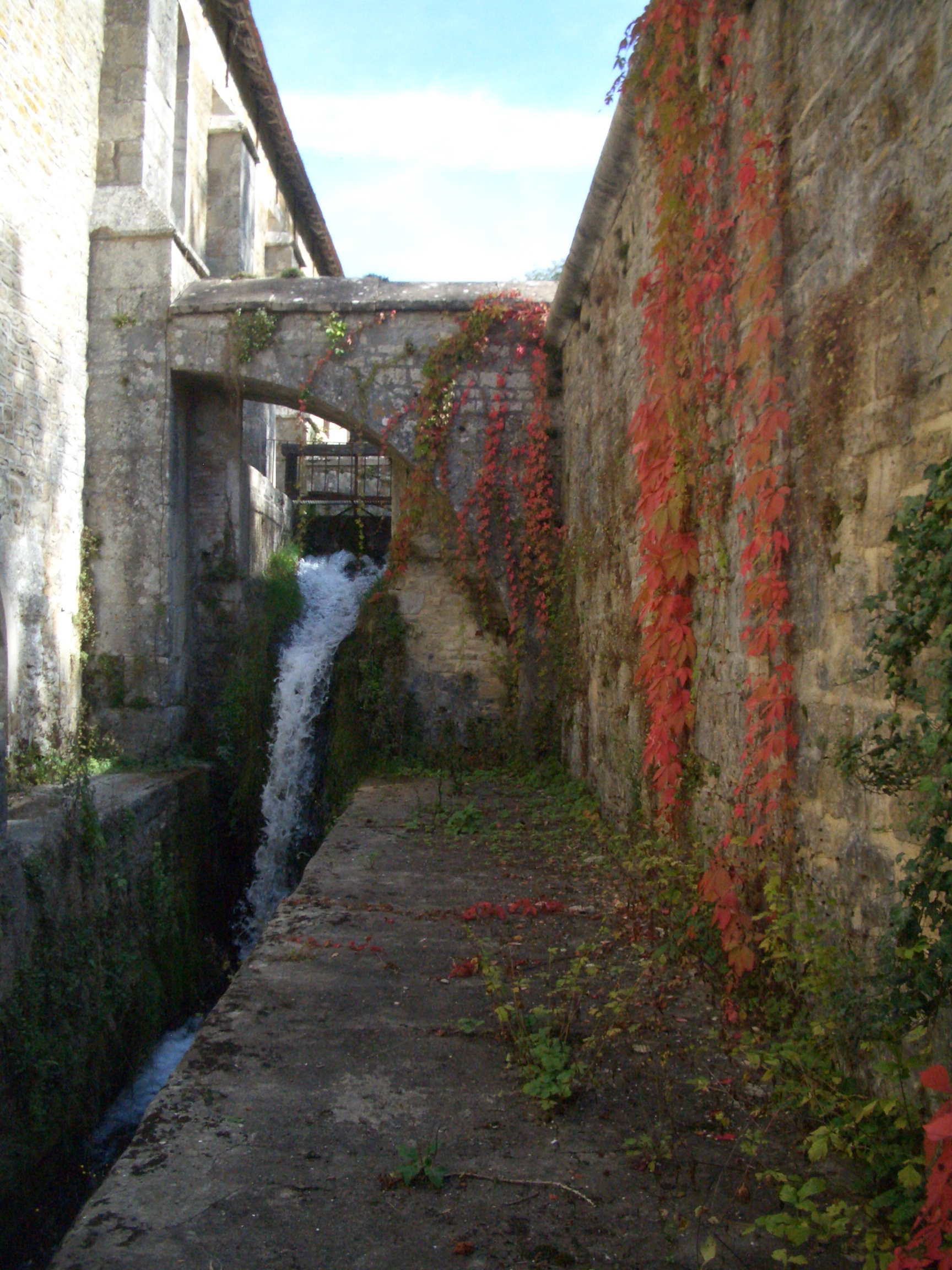
Under the favourable conditions of the Medieval Warmth, the agriculture innovations from around the turn of the first millennium onwards saw in increase in surpluses produced which increasingly became available for export. Because of the change over from the two fields to the three field system on average an increase of 16% in food production occurred, in some areas the increase was as much as a quarter of all yields. Cattle farming produced even larger surpluses. This was supported with some important innovations in the 14th and 15th centuries. The horse collar took away the choking weight from the horse’s windpipe, thereby increasing its horsepower output by 400%. The horse shoe increased the output even further by providing the horse with more endurance. In Flanders and Brabant the new carrucaplough with its sharp rectangular blade allowed the farmers to loosen the heavier soil here and turn it deeper. There was also a small pre-industrial revolution starting with the invention of windmills and watermills. We saw one of these early watermills at the Abbey of Fontenay in Burgundy.
These innovative farmers also started to experiment with lay farming, using fallow land to grow horse fodder, peas, beans and nitrogen-rich clover. Common farmland was changed in a more rational lay out developing enclosed larger parcels of land that could be used for these special crops and the new land management methods.
Already at its early stages, the agriculture boom, also led to an increase of the population, which in turn saw the need for more agriculture land, this stimulated the many land reclamation projects in north-western Europe, especially in the Low Countries, most of which had been largely been inundated between 250 and 1000AC. Land reclamation reached its zenith in the Low Countries in the 17th century, by that time Dutch farmland had been increased by a third – roughly 100,000 hectares had been added by 1650.
The population of the Low Countries increased from approx. 125,000 around the year 1000 to close to one million by 1350.
Improved technologies led to a higher yield per farmer, this resulted in more people becoming available for other economic activities, this resulted in for example the exploitation of new (commercial) crops or adding other activities to the existing ones such as fishing or cottage industries.
We also see an early form of specialisation. England became the most important wool producer, salt came from France and Zeeland in the Low Countries, raw materials from Maas region, wine from German, beer from Holland and fish and corn from Prussia and the Baltic States.
Another major change that had started in Carolingian times only started to break through; the secularisation of writing. Slowly writing started to move on from the religious to the administrative and commercial elements of society. Slowly this first started to happen in the Courts and coincided with a revival of interests in Roman Law. This started to replace the trust based feudal systems where a arrangements were sealed with a kiss on the lips. By the 11th and 12th centuries contracts started replace these trust relationships and this in turn stimulated the commercial developments. This in turn also greatly assisted the merchants and cities to govern their own affairs as concepts, thoughts, ideas and arrangements could now be put down on paper and discussed with others. This ‘revolution’ provided power to those who used the many new benefits that writing had to offer and rapidly started to demolish the feudal arrangements. Communes started to become the first elements of independent city management and their oaths developed into documents that started to become the basis of the (written) city privileges. See also:The arrival of the cities
This agriculture revolution allowed for a rapid increase in population and was the key driver behind the wealth explosion. In the 13th century the south north river systems through northern France, Flanders and Brabant saw large quantities of grain moving north from the fertile regions of Artois to the wealthy cities further north in Brabant and Flanders. This also highlights the importance of the symbiosis between the city and the region. The region was important for the production of trading goods but also they were an important market for the city merchants. Zuthpen for example had as many people in its region as there were in the city. Of course in such a situation keeping the balance between the region and the city was always a delicate one. City privileges often guaranteed certain monopolies to the cities such as milling, brewing and markets, this of course often led to tension with those in the region who would like to see more freedom for their activities.
However it was the wool industry that propelled this region into an economic cloth and textiles powerhouse. Interestingly knitting (derived from the old Dutch work knutten) arrives reasonably late, only during the Late Middle Ages are we starting to see more knotted ware.
The cloth and textiles business
At the coastal areas of the southern parts of the Low Countries the inhabitants have been breeding sheep since the very early times. Looms were already in use in prehistoric times. In the 3rd century the Romans reported on the good quality of the robes coming from Doornik (Tournai) and Atrecht. In Merovingian times the fair of Champagne served as the first means of selling Flemish goods. Frisian wool (pallia fresonica) was internationally recognised as the best wool in the early Middle Ages.
It estimated that in the Middle Ages there were approx three times more sheep than people in Europe.
Innovations only started to arrive during the 11th century, when the horizontal loom with pedals arrived – most likely from China – in Flanders, used for the weaving of the famous pallia fresonica. The spinning wheel arrive – again also most likely from China – in the 13th century, this increased productivity tenfold. All of these innovations also led to the development of the cloth industry that moved from the cottage based industry to the cities. However, for many centuries to come the rural cottage industry remained of equal importance. A third innovation was the fulling mill, using horse power or water power, instead of the feet of the fullers. This was one of the most disgusting jobs of the Middle Ages as it required people to trod on cloth for two hours at the time – day in and day out – in big tubs with stale urine. It was the ammonia that took the grease out of the wool.
The industry went through a boom period starting from the 11th century, Atrecht was the centre of it but also Rijssel (Lille), Dowaai (Douai) and St Omaars (St. Omar) made their entry in this market. In the 13th century the centre of gravity of the industry moved further north to Ieper, Bruges and Ghent.
Bruges and later Antwerp were the leading trading cities of the Low Countries. After the Fall of Antwerp in 1585 the trade center of Europe moved north to Amsterdam. Leiden and other cities in Holland and Zeeland. Not just Antwerp suffered after the Spanish onslaught, also Bruges and Mechelen lost more than half of their population – all of them moving northwards.
These innovations led to an increase in the wool trade especially between the Low Countries and England.The Flemish received their wool from across the Channel, England was renown for its excellent quality. The 100 year war between France and England caused major disruptions and over time more and more wool was imported from Spain.
Onerous regulations regarding quality, length and width of cloth and their places of origin and a range of other English trading restriction such as the Wool Staple (import restrictions) severely disrupted the growth of Flemish trade and were a significant cause of the slow but steady downfall of Flanders as an economic European power house. England and Brabant took over and Antwerp rapidly developed as the new commercial centre.
However, in 1356 still as much as 63% of the population of 64,000 in Ghent was working in the cloth and textiles industries.
The English word ‘cambric’, for a specific fine quality cloth has its name from Cambrai (Kamerijk) in Flanders, which in the Middle Ages was famous for this product.
From around 800 onward the living standard in Europe kept on improving, despite some very severe famine, plagues, floods and other disastrous events.
Maritime trade
After the collapse of the Roman Empire trade in the Mediterranean became in the hands of traders in Constantinople and Alexandria. With the decline of the Byzantine Empire – from around the 10th century – the merchants on the Amalfi coast in Italy were able to become the dominant trades in this area. However, it was Genoa further north that eventually became the center of Italian Mediterranean trade. This also led to a power shift from central Italy to north Italy which would have far reaching consequences for European developments from the 12th century onward.
In northern Europe, when the river trade was replaced by sea trade, around 1300, the trading power shifted from the above mentioned river ports to those along the Atlantic Coast. Direct sea trade with Genoa and other Italian cities, started to cut out the land locked trading centres. In particular Genoa played a key role here, they had to expand further west as Venice increasingly started to dominate the east-Mediterranean trade. At their height of their trading power, around 1300, 13 cities in Italy had more than 50,000 inhabitant. With the exception of Palermo all the other cities were in north Italy. Venice, Milan and Florence each had more tan 100,000 inhabitants. Trade required a good hinterland the fertile Po flats provides much of the needed produce, this created wealth and that attracted others to dominate the trade not just to the sea ports but also across the few trading routes via the Alps between north and south Europe.
Merchant started to join forces first to secure their travels but very soon also for other support and security services and this led to the guilds and hansas (Hanse=guild in German).
This also allowed other cities to participate in the economic boom. This in turn led to a shift in economic power from the southern parts of the Low Countries to the Northern parts, initially driven by the IJssel cities such as Deventer, Zwolle, Tiel and Kampen. However, these cities were never able to reach the level of urbanisation and mercantile activities as other cities such as Brugges, Ghent, Antwerp, Dordrecht, Leiden, Amsterdam, Utrecht or Nijmegen. At their height in the 15th century Deventer, Kampen and Zwolle for example only accounted for 30% of the population of Oversticht. The urbanisation penetration of the cities in Holland accounted for 45%.
While shipping trade was in general ten times cheaper than land transport, cattle could not be transported that way. Significant cattle trade stock routes eventually evolved all the way from Denmark and Sleeswijk-Holstein to the river ports cities in Gelre and Over-Sticht and from here land routes continued to Flanders, Brabant and Holland. The Frisian ox trade between Westphalia and the Rhineland became very successful during the 15th century. Ootmarsum, Bentheim and Oldenzaal also greatly profited from these land routes. Deventer became the most important interregional trading hub in this region.
Inefficient feudal transport systems
The feudal medieval system was not very conducive to efficient and effective transport. The practical organisation of it was handled by the shippers guilds often in cooperation with their city councils. To facilitate trade, quays had to be built and they as well as the river harbour itself needed constant maintenance, cranes needed to be installed and operated, harbour labourers were needed to load and unload the ships.
However, all these guilds had their own rules and regulations. Within the Hanse there was some form of coordination through the negotiation of privileges but they were far from uniform and many merchants and cities had also separate private bilateral arrangements.
The sea trade was often negotiated with overseas governments, kings and counts, this allowed organisations such as the Hanse to built up their privileged position.
However, the river trade often meant lengthy negotiations between the shippers and the guilds and the cities they passed through. Some had staple rights which required certain goods to be unloaded and reloaded in other ships. Obviously the richest merchants were always able to negotiate the best privileges.
On the rivers Scheldt and Leie the powerful shipper guild of Ghent was in charge of the transport arrangements. This basically provided them with a shipping monopoly, this made it nearly impossible for outside shippers to operate on these rivers. A similar situation occurred on the rivers in Brabant, which again made it nearly impossible for others to use these rivers. In the same way, Hamburg controlled traffic on river Elbe, Bremen controlled the Weser and Riga the Dvina.
On the river Rhine – the most important inland transport route of the Middle Ages – the situation was different again, the river crossed many feudal states this stopped monopolisation but there was also the constant political interference and the ongoing wars between them which greatly interfered with the trade. Sometimes blockages lasted for months even years.
But what monopolisation prevented feudalism replaced; for example there were ten tolls between Dordrecht and Köln. Apart from that many cities had the right to check the ships which greatly delayed transport and further increased costs. The infamous Gulik and Jülich tolls were so high during the 15th century that massive long-haul transport was developed (hessen wagons) to bypass these tolls.
But of course also the overland roads had many tolls . It wasn’t until modern times that this inefficient system of tolls started to disappear.
Despite all of this a extensive, integrated and well used transport network of rivers and road operated throughout the region. Sometimes the ‘systems’ competed with each other but in general they were very complimentary.
Hanseatic League
The Hanseatic League never started of as the alliance for which it is so well know. It grew between 1280 and 1650 rather gradually and operated more like a virtual network than a formally organised trading organisation. In its heydays (14th century) the alliance of trading guilds operated a trade monopoly that extended over the Baltic Sea, a large part of the North Sea, and most of Northern (inland) Europe . For a while they even effectively controlled Denmark’s monarchy. This League evolved into a very large trading circle of goods between the North Sea and the Baltic Sea. Original trading products such cloth were complimented with iron ore and copper from mines in Germany and Sweden, skins and honey from Russia, timber, grain and since the addition of hop to the beer brewing process, beer became another trading good. Herring and salt (need for the preservation for herring) were also products that featured on the top ten list of trading goods.
During the period of agriculture expansion more commercial crops were planted, this led to specialisation, based on the best soil and climate conditions. Grain became the first bulk product, which led to the development of supra-regional market mechanisms. This in its turn led to innovations in ship building and the need for return cargo. During the height of the food crisis in northwestern Europe in 1317, grain was imported from Morocco in ships that could handle 8000 tonnes.
By the 14th century they had established a well integrated European market from Prussia and the Russian Principalities in the east to Scandinavia in the north, England in the west and the whole of the Mediterranean region in the south.
Trading routes rapidly started to criss-cross Europe. Around Europe, the Middle East and North Africa the foreign traders grouped together in the new cities. Here they build their own warehouse and living quarters which developed into specific trading quarters. These quarters often received special privileges regarding tax exemption, (diplomatic) immunities even with their own (military) protection. These enclaves made it also a bit easier for these expatriates to live and work in foreign countries.
The Hanse ‘Kontors’ (Offices) in Bruges for example became a privileged and wealthy part of the town . The first companies (cum pane = eating bread together) emerged in northern Italy in the 12th century and that commercial concept rapidly spread to all the major trading cities of that time. Merchants, tradres and other investors took part in owning ships and cargo as well as in financing trading trips and expeditions.
Historians generally trace the origins of the League to the foundation of the Northern German town of Lübeck, established in 1158/1159 after the capture of the area from the Count of Schauenburg and Holstein by Henry the Lion, the Duke of Saxony. This town remained the geographical centre of the League. A turning point in the history of the Hanse was the Treaty of Stralsund in 1370 which ended the wars between the League and the King of Denmark. This restored the trade privileges of the Hanse and established the League as a powerful political entity.
The League succeeded in establishing some 200 additional Kontors they included: Zwolle, Hattem, Hasselt, Cologne, Osnabrück, Münster, Roermond, Deventer, Groningen, Kampen, Zutphen, Oldenzaal, Bruges/Brugge, Antwerp, Arnhem, Bolsward, Doesburg, Greifswald, Harlingen, Hindeloopen, Nijmegen. At its heights they stretched across northern Europe from Novgorod to Edinburgh (video clip – also castles and cathedral).
In 1418 the Zuiderzee cities formed their own unit within the Hanse.
In all there were 70 towns who were official members of the League and another 200 trading towns also working within the Hanse. In our region, Antwerp was the most important cities the Hanse traded with.
However, most of the times the Hanse was unable to overcome the local or regional interests of the towns, these interests were often diametrically opposed and this prevented the Hanse from becoming a true pan-European trading power. In 1293 for example when Lübeck wanted to break the trade monopoly the Frisians had on the Baltic Sea trade, the Wendish Hanse towns were supported by the (largely Frisian towns) Kampen and Zwolle.
Nevertheless despite its fluid character and its lack of a large scale formal organisation the Hanse was able to operate as a political power next to those it its surrounding countries. Merchants and cities operated within the Hanse in a very opportunistic way; they were active when needed and absent when there was nothing to gain for them. What did bind them was the opportunity to lower transition costs and as such increase their profit margins, it was as simple as that.
From the start onward the merchants received the support and the protection of the Emperor, when that support started to weaken during the Hohenstaufen dynasty, the Hanse cities started to form stronger relationships with each other in order to maintain their power. This became easier for them as the cities started to fill the power vacuum and grew more and more powerful. They even established their our naval fleet. These cities had of course a great incentive to support and protect their merchants as they brought wealth and prosperity to these cities. From these cities the merchants established their trading empires; they often became members of the ruling city class. From these cities they send out their ships, no longer lead by them, but their captains who as trading partners did all of the overseas trading work, together with their office staff in these cities.
They used their (virtual) business network to combine forces in their trading cities, where they operated combined kantors and where they negotiated trading privileges and other arrangements with the local rulers. They established their own unified code of conduct and also negotiated security arrangements to protect their trade against piracy and also to break blockades by governments and cities that prevented them from trading, or established blockades against cities that refused to trade with them. But also on this level the network remained fluid, cities opted in and out of these arrangements and many sub groups operated within the larger network. What kept them in general together was that all cities and their merchants profited from arrangements made by others within the network. Because of the close relationship between the merchants and the cities, it sometimes is difficult to establish a clear demarcation line between the two.
Like the guilds in the towns, they also had their own extensive social network with arrangements for widows and orphans, they frequented certain inns and had their own social clubs. Brugge was at that time the most networked city in the western world.
However, while the Hanse remained a typical medieval organisations, whereby their arrangements depended on relationships. On the other side the Courts of the major powers became increasingly more professional with improved administrative and legal structures, these emerging states no longer accepted the privileges that were dictated by the Hanse.
After 1400 the towns in Holland and the Hanse started to go their own ways; the Hollanders increasingly became a threat to the Hanse. They had steadily increased their share of the bulk trade, they had been able to built better ships cheaper and were taking a larger share of the shipbuilding industry and their merchant fleet had grown larger than the entire Hanse fleet.
When Holland joined the Burgundian States in 1437, the cities negotiated better access to the markets in Flanders (also part of Burgundy) including an upgrade of the port of Sluis, the gateway to Bruges and beyond. As a consequence the cities in Holland no longer actively participated as members of he Hanse, however, they remained very active in the Baltic trade.
A power clash was inevitable and this led to the Holland-Hanseatic War (1438 – 1441). In 1440 the Hollanders captured the entire Hanse fleet. The next year – at the Treaty of Stralsund – they agreed on a truce for twelve years with the towns of Lübeck, Hamburg, Rostock, Stralsund, Wismar and Lüneberg. While the Hanse (Lübeck) tried to hold on to its monopolistic trading system, protected by privileges, Holland and England favoured free trade arrangements. Competition rules and this led to innovation and soon Amsterdam merchants won free access to the Baltic and broke the Hanse monopoly.
This war also resulted in a split between the cities of Holland and the cities along the river IJssel, who still supported the Hanse, they also were affected by the increased trading power of Holland and their trade had become stagnant – they never recovered from that.
From this time onward, the Dutch traders became too powerful for the Hanse and this became the downfall of the League.
The Hanse finally became an institutionalised organisation in 1447. This led to the division of the trading region in four quarters: Lübeck, Braunschweig-Magdeburg, Hamburg and Köln. This last quarter included most of the cities covered in our area: Münster, Nijmegen, Deventer, Wesel and Paderborn. Later on we also come across more inland cities of the Low Countries involved in the Hanse: Elburg, Venlo, Roermond, Hasselt, Oldenzaal, Ommen, Hattem, Tiel and Zaltbommel. Several of these cities became critical hinges between the Hanse and Holland cities. The confederation of Cologne (Zuythanse – south Hanse) also made history when in 1369 they were able to negotiate the above mentioned Treaty of Stralsund. A further division was made in 1447, within these confederations. The Zuythanse was further split up in five regions. The capitals of all the regions of all the confederations also formed a further alliance known as the (friendly) toh0pesate (cooperation). Within this arrangements each of the cities had to contribute soldiers according to the importance of their city within the Hanse. Nijmegen was one the regional headquarters.
Zwolle developed itself as a key station post in the inland river trading system. Ootmarsum was also situated along the Hanse route along the road network between Flanders and Holland on the one side and the German and Wendish cities in the north-east.
Deventer took over the leadership role from Zwolle along the IJssel and became a supra-regional hub to the German hinterland. In 1538 Deventer stated that each of its famous annual fairs attracted between 1400 and 1500 wagons from Twente, Münster, Paderborn, Osnabrück and even from Hessen, Meissen and Thüringen. However, slowly Amsterdam started to dominate the international trading activities, using large new cargo ships that among other places travelled to the Baltic cities in north Germany.
Kampen (see videoclip) was the first IJssel city that started to feel the pinch here. By the start of the 17th century trading with the German hinterland was directly conducted from Amsterdam and started to bypass the IJssel cities and Deventer was relegated to a secondary trading town.
Following its success in the Hanse Wars, Holland supported by the Dukes of Burgundy and later Emperor Charles V, followed a policy of diplomacy to undermine the faltering unity within the Hanse where increasingly more cities preferred a more open market system. In 1514 Lübeck and the Wendish cities unsuccessfully tried to limit the trade from Holland. The Sound (Danish Sont) blockades in 1522-1524 did not have any serious result on the free trade movement.
Lübeck became an early supporter of the Reformation and later joined the Schmalkaldic League. Since 1529 it had a weak and divided rather radical democratic government and suddenly behaved totally out of tune with her actual power, amongst other things the city claimed it could nominate a candidate to the Danish throne as well that it had the rights to close the Sound. This led to a series of serious conflicts. However also the Sont blockades from 1532-1534 had little effect. Lübeck unsuccessfully tried to reintroduce the stapel markets and also their attempts to limit the trade from Holland, Zeeland and Brabant – through quotas – failed. Lübeck also had stared to lose the support of cities such as Gdansk and the cities in Prussia and Latvia. Also the kings of Denmark opposed Lübeck and favoured free trade on the Baltic Sea.
The religious wars following the Reformation led to further troubles for the Hanse trade.The Duke of Gelre for example forbade the representative of its (Ijsel) cities to travel to the Hanze meeting of 1530 in Lübeck, as these representatives would have to travel through the lands of heretics and he feared they could be infected by them. It was at that meeting that it was decided to move the Hanse Kantor of Brugge to Antwerp. Further restrictions were issued by Gelre that prevented the Hanse representatives this time to travel to Lünenburg. This was for the first time in the Hanse history of the IJssel cities that higher authorities interfered in their trade. A clear indication that the medieval power of the cities was fading and that the larger government organisations started to dictate trade policies.
One of such precarious situation occurred in 1531 when the king of Denmark Christian II landed in the Netherlands to seek military assistance to suppress a revolt from his nobles, who opposed his progressive reforms. He was married to Isabella of Burgundy, the sister of Emperor Charles V. Despite the fact that Christian severely mistreated Charles’ sister, all in the name of securing the family’s inheritance, candid support was provided, however, the Dutch never provided him with any military assistance. Their trading interest in the Baltic were far more important to them. Nevertheless the Hanse (Lübeck) linked Christian to the Dutch and closed – as mentioned above – the Sound to all Dutch ships. This unwillingly drove the Dutch into the arms of the Danish kings as they prepared for an open war against Lübeck.
Christian was lured to come back to Denmark to discuss a settlement with his nephew Frederick. He was captured and was kept imprisoned for 27 years at his castle. While Charles V aunt Margaretha of Australia was busy , as the Governess of the Low Countries, to try and solve the trading problems with the Hanse, Charles V tried unsuccessfully to salvage as much as possible of his family inheritance now his Danish brother in law was disposed.
While the issue never scored high on his agenda, the Emperor clearly understood the value of trade. In a letter from the Emperor to Henry of Nassau [1. The Emperor Charles V, Karl Brandi, 1939, p 347] he wrote about the Netherlands ‘These lands are rooted above all in commerce and we must not lose sight of this’. In his political conflicts with England he made sure that the trade between the Netherlands and England remained untouched. No doubt that Margaretha’s continuous message to him in relation of the importance of this commercial relationship between these two countries was paying off. He also protected the merchants of Antwerp, despite their differences in relation to religious issues. On several occasions he supported the Dutch merchants in their ongoing attempts to create open seas in the Baltic by providing them with imperial forces if needed to war with Lübeck or Denmark.
Thanks to Margaretha’s relentless efforts, an ‘open seas’ settlement was arranged in 1534 whereby the Netherlands received free passage in the Baltic.
After Charles V conquered Oversticht and Gelre he also confirmed the trading privileges of the Hanse cities: Deventer, Kampen and Zwolle in 1528, Groningen in 1536 and the Gelre cities in 1543. Politically however these cities had to accept the authority of the Hapsburgs and obviously this led to ongoing conflicts and in the end it was political power that had the final say.
The conservative nature of the Hanse – based on privileges – stopped them from innovation. On the other hand, the open-trade systems promoted by Holland was very conducive to change. Apart from technological innovation, financial innovations were as important. Merchants spread their goods over a larger number of ships. This allowed them to transport at low cost and low risk, this significantly improved their competitiveness in relation to the Hanse system. The Hanse stayed well behind these innovations as well as the management and administrative developments which took place in Italy.
The slow decline of the Hanse also had its effect on the hinterland. New north-south trading routes developed between central and South German and north Italy. The emerging economies of Poland and Hungary started to leave the sluggish systems in Prussia and north Germany behind and this also led to a decline of the Ijssel cities in the Low Countries and places such as Ootmarsum and Oldenzaal.
In the end it was the Thirty Year War (1618-1648) that became the death knell for the Hanse trading system. The very last Hanse meeting in Lübeck took place in 1669, only six cities showed up for this meeting. Lübeck, Hamburg and Bremen continued their cooperation and operated overseas Kantors in Bergen, London and Antwerp, this treaty finally ended in 1920. A cultural revival of the Hanse started to occur in the late 20th century.
See also videoclips;
Lübecker Don, St Marien Basilik
Lübeck Heiligen-Geist Hospital
Bremen Rathaus Marktplatz St Petri
Coastal trade
While the Hanse and Mediterranean shippers traversed these seas, there were also a successful and active coastal traders operating along the Cantabrian and Biscayan coast. It was under the leadership of king Alfonso VIII of León who founded the ports of Santander (1187) and Laredo (1200). From here they started to develop in the key ports for the trade with northern Europe. The seas in the Gulf of Biscay are feared for their atrocious waters and until the 18th century less than 20% of foreign ships dared to pass Cape Finistère. The Spanish traders also combined their efforts and had a strong presence in Bruges were they were known as the ‘nation of the Biscayes’. Key coastal towns for this Atlantic coast trade were: Bayonne, Bordeaux, La Rochelle, Harfleur and Rouen. The Castilians also started to play a key role in the coastal trade. This coastal experience was also important to the Portuguese as will be discussed below.
Trade on Asia and the need for discoveries
After the collapse of the Western Roman Empire, contacts with Asia mainly remained limited to the eastern Mediterranean and the Black Sea and was mainly in the hands of Greeks, Jews and Syrians. With the arrival of the Vikings the trade with Asia became more and more in the hands of the Russian Principalities and the Volga Bulgars; they brought eagerly thought-after luxury goods from via the Black Sea and the eastern Mediterranean into northern and western Europe. In the eastern Mediterranean it were the Genoese and Pisans who dominated the eastern trade in the 1oth century.
With the arrival of the Mongols – from the mid 13th century onward – we saw these newcomers taking over these trading routes. However, a century later their empire started to collapse and travelling over the old Silk Routes and the Horse and Tea Routes became a very hazardous undertaking for foreigners. It were the Sogdians – traders from cities such as Samarkand, Buchara, Khiva and Tashkent who now controlled this trade and who were in better position to defend their trading routes against marauding bands or local kings and landlords in Central Asia.
At the same time the Muslims became more militant against the ‘infidels’, which made life difficult for the Christian traders. The Ottoman Empire had been extended to include all of modern Turkey, the Middle East and North Africa.
Cities such as Venice and Genoa felt the effects of these changes and this forced the merchants to start looking at new maritime trading routes to Asia. It were the Portuguese led by Prince Henry the Navigator who started this quest with the first exploration expedition along the west coast of Africa.
It is rather amazing that it were the Portuguese who- at the beginning of the 15th century – took over the lead in the international maritime trade. It was a rather poor – agriculture based – country. However, it was its fishing tradition that delivered them the sailors and navigators needed for the next big step in conquering the more rougher seas of the Atlantic (or Ocean Sea as it was called at that time). The visionary Prince Henry put the money on the table that allowed these seamen to undertake their voyages of exploration. He was fascinated by new technologies in shipbuilding, navigation astronomy and instrument makers and brought the best people to his court in Lisbon. He was like all of his medieval counterparts deeply religious and had heard of a mythical Christian kingdom that was supposed the exist somewhere in Central Africa. He wanted to make contact with ‘Priest John’. Other important reasons for these voyages were: bypassing the Muslims and tapping into the rumoured gold mines and establishing an alternative route to the spice markets. Bartholomew Dias was accident rounded Cape of Good Hope in 1487 and in 1499 Vasco da Gama reached India.
As often happened with incumbents, the Portuguese made a critical mistake by sending the Genoese Columbus away who had plans to reach China by sailing west, he ended up at the Spanish Court and the rest of course is history.
The still powerful Pope consequently, in 1494, divided the world in two parts by drawing a line around the world around 300 miles west of the Azores . Under the Treaty of Tordesillas west of the line and the lands on the east to the Portuguese.
However, in the end it were not the pioneers of the new discoveries that became the winners, but the second wave in particular the Dutch and the English.
Around 1550 Emperor Charles V ordered an audit on the value of the trade of the Seventeen Provinces of the Low Countries. Annually some 5.7 million guilders worth of goods were exported. Antwerp took 4.3 million of this and Amsterdam 355,000 guilders. At that time Antwerp had 40,000 inhabitants and Amsterdam 15,000.
Money matters

- Van der Beurse – Brugge
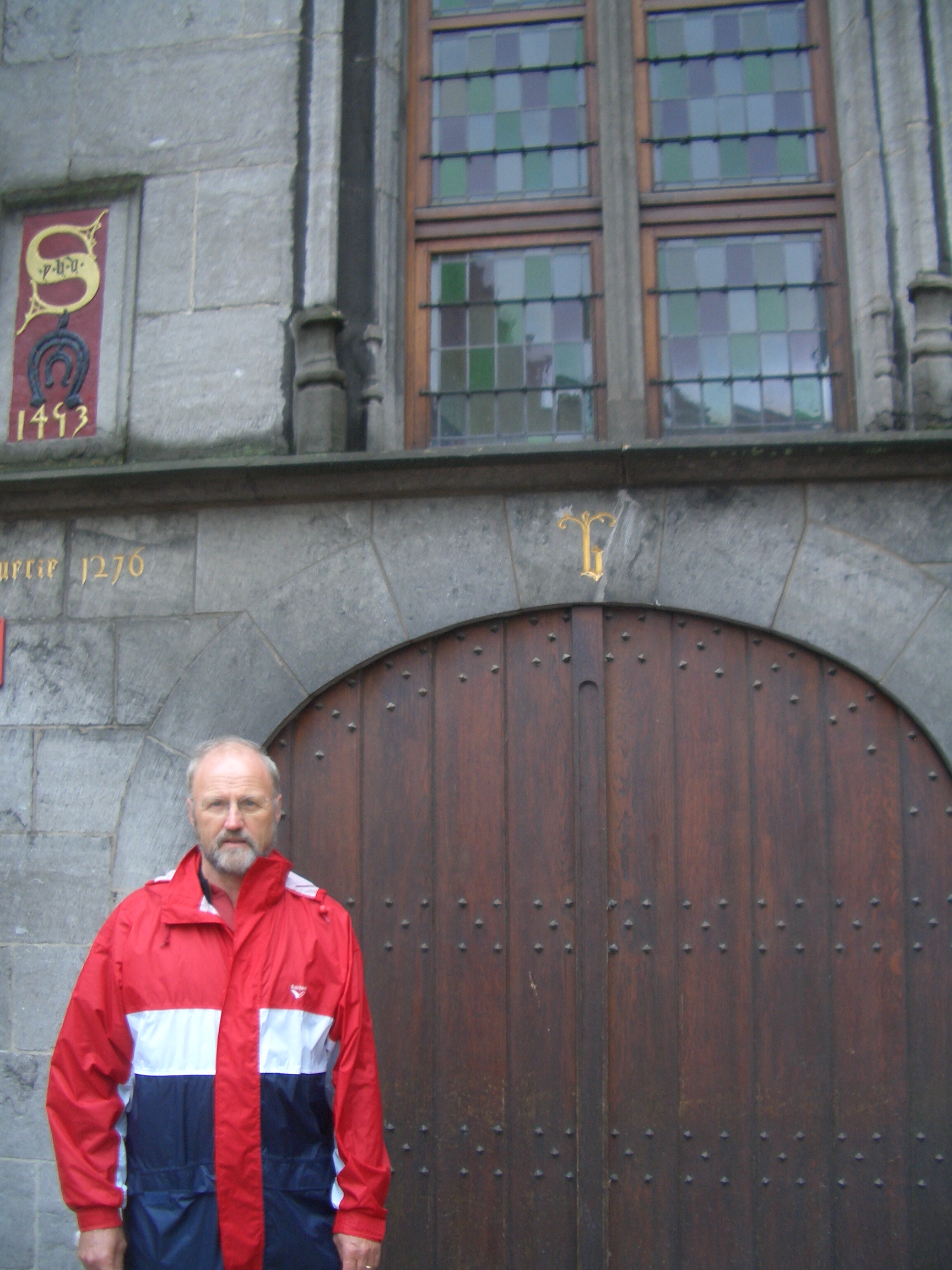
The economic boom and growth of the population between 1000 and 1200 saw the change from an economy based on subsistence where the local lord was the only consumer of surpluses to one where surpluses were traded on local markets. Very little money changed hands in the subsistence economy; however the new economy did require the use of money. With territorial rulers starting to become involved in minting, trade started to expand across Europe. The actual value of the metals involved was of critical importance and was often a matter of dispute as rulers and others started to mess with these metals especially when they were in need of money. The most infamous of them all was the French King Philip IV (the Fair – 1268-1314), who received the nickname ‘le roi faux monnayeur’ (the false coiner king). In the end this led to the circulation of ‘black money’; so named because of the discolouring of the coins as large amount of tin and lead were mixed into it.
A more positive development was that the importance of inter regional trade to the rulers also led to currency unions. The cities were lobbying for these unions in order to make it more attractive for merchants from other regions to trade in their cities. The first known union in the Low Countries was signed in 1337 between the Count of Flanders and the Duke of Brabant. In 1431 a similar arrangement was made between Brabant and Holland and three years later under Burgundian rule a new coin was minted – the Burgundian ‘Four lander’ (vierlander) – to be used throughout the States of Burgundy, later on the coin was also used in Luxembourg and Gelre.
After the collapse of the Roman Empire, money largely disappeared. When standardised Roman coins started to disappear villages, towns, monasteries and individual nobles started to mint their own. However their legitimacy was often only very local and bartering became the key basis for trade in the Early Middle Ages.
Frisian traders required money and in the 7th century Frisian coins appeared (silver denarius), this ended when the Normans laid waste to Dorestad.

- Coins minted in Dorestad
A short revival happened during Carolingian times, with coins appearing in copper, silver and gold metals. A lack of a range of values and the fact that money, even when it was available, hardly ever went into circulation (it got saved, e.g. to pay taxes or big ticket items like a cow) might even have hampered the monetisation of the economy. After a ruling from Pepin II in 670 gold coins (solidi) disappeared from circulation. More regulated mining, under the control of dukes, counts and kings, started to re-occur in the 12th century (including gold coins), widespread use followed soon there after. Large silver coins started to become in use once more raw materials started to become available in the 13th century, large gold coins a century later. From this time onward we can start talking of a slowly re-emerging money based economy.
While the economy was still largely dominated by agriculture, commerce and industry were fast expanding, shifting economic capability (and power) to the towns and cities. Demand from the cities also increased trade (and income) from the rural areas. Especially farmers operating on the fertile reclaimed lands did well. Their plots were in general larger and in general again they also owned the land. Rather rapidly these fields were used for dairy cattle and this lead to the production of butter and cheese; an export product the Netherlands is still famous for.
Already at the end of the 13th century wheat was imported into the Low Countries from the Baltic countries and the Upper Rhine region (see also Hanseatic League above).
The phenomenal growth in international trade led an enormous growth in wealth during the early part of the 14th century, especially in the cities of Flanders, Brabant and northern Italy. The subsistence from the previous 800 years this was rapidly changing into a currency based economy.
To support trading and commerce a very extensive banking and finance system emerged from Italy. In order to limit risk, pool capital and share profits they started to formalise their agreements and this became temporary partnerships and these in turn grew into ‘compagnies’ (literally meaning ‘ bread together’ – sharing bread). The ‘campagnie’ also became involved in pure banking activities. Banks evolving from these campagnies often made enormous loans to rulers andthey collapsed when these rulers defaulted.
Pawnbroking – Lombard banking
Pawnbroking has a history that goes back to ancient times its name is derived from the Latin word ‘pawn’ that means ‘pledge. Most of the original regulations around pawnbroking date back to Roman times.
Other financial constructions were invented as well, similar to the current Islamic banking system. Usury was prohibited both under Christian and Islamic law. This was seen as ‘selling time’ and time belonged to God, hence lending was seen as theft. Pawnbroking was the only way to lend money without the involvement of interest. However, the border between the two became more and more blurred. Straight money lending was only tolerated if done by people outside the Church (by what the Church called heretics) such as Jews . Under Mosaic law also here usury was prohibited but in their religion only between Jews.
Pawnbroking became known as Lombard banking and started in the pawn shops in Rome, this grew in an elaborate system of credit granting based on bills of exchange (ricorsa). This system spread all over Europe (but mainly in the south, the Hanse hardly used these bills of exchange and preferred to trade in hard cash – which however, often was in short supply) and ended the role of the Jews as the bankers of Europe.
Pawnbroking – as separate from money lending – was officially endorsed by various Christian leaders as early as the 12th and 13th centuries as a charitable alternative to usury and a way to financially assist the poor.
The link between Lombard banking and charity can also be seen in the symbol used by the pawn shops, they were marked with three circles or spheres. It is believed to have been a tribute to the traditional symbol of Saint Nicholas and used as a sign of charity.
Northern Italy became one of the first ‘modern’ trading centres and Lombards were often seen at the upcoming trading fairs in France. They rapidly became the financial experts and soon any Italian financial expert was called a Lombard. They also became financial advisors at several courts in Europe and by the Late Middle Ages they were Lombards is all major towns and cities in northern Europe. Despite Church Law many courts and cities used their privileges to allow Lombards to become involved in lending – of course with a nice tax flowing into the coffers of the rulers. Even relative smaller towns such as Heusden, Woudrichem and Culemborg had Lombards operating in their communities , often from the local castle or town hall, this also allowed the local rulers to keep an eye on the business as this also provided a lucrative income for them. In Culemborg they had their exchange next to the 14th century town, both buildings were in 1530 replaced by a new town hall built in Brabantine Gothic with renaissance elements, which I visited in 2013.
In 1309 there were 88 Lombards operating in 78 places in Flanders and Brabant. In 1332 Lombards were invited by the Duke of Gelre to also operate within their territory. [2. Culemborg in de spiegel van zijn middeleeuwse stadsrekeningen. Remi van Schaïk. Stedelijk verleden in veelvoud. 2011]
- The current town hall (1530) replaced the previous building and the Lombard exchange that stood at this spot.
In 1260 Gijsbrecht van Aemstel financed his business through the local Lombards in Utrecht and he was charged interest for one loan 86⅔% and another one for 65% per annum. It is clear that despite church rules the economy was well and truly capitalistically organised.
As in the early days throughout the Middle Ages Lombards kept moving around and following the annual fairs and were – despite their relative low numbers -a well known group of people throughout the various medieval counties and duchies.
The position of Lombard remained however precarious as they could easily be prosecuted by changing laws or referring to church law. The high risks involved in lending led to the extreme high interests rate as indicated above. The biggest lenders (local rulers) often couldn’t afford these interests and in particular in relation to the Jews that led to expulsion and prosecution as in that way they could wipe out their debts.

Money exchange transactions started to take place around Europe at set times of the days. This happened in Bruges in the famous inn of the family Van der Beurse. They lend their name to the most important element of the modern capitalistic society the ‘Bourse’ (Exchange). The inn was right in the middle of the kantor sites of the Genoese and the Florentines. The leading banking families of the Late middle Ages where the Medici in Florence (1397-1496) and the Fuggers in Augsburg (1354 – 1641). It were also these banking families who profited enormously from the discoveries in the New World, much of that wealth flew straight into the pockets of these banking families, who underwrote large parts of the trading expeditions. The Medici Bank collapsed mainly because of bad management, bad loans to secular rulers (especially the English Kings) and internal fraud. The final death-knell happened after the French King ended the reign of the Medici in Florence. At the time of its collapse it still was the largest bank in Europe. Fuggers took over many of the assets of the Medici Bank after its collapse but didn’t survive the massive devastation caused by the Thirty Year War.
However, in general the financial institution to handle the rapidly growing currency-based economy effectively were limited in numbers and those who did operate within this environment found it extremely difficult to cope with these massive economic changes. Amazingly the administration and banking innovations developed by the Medici in the 14th century only spread slowly through the rest of Europe and became only more universal in the 15th and 16th centuries.
The monetary system remained chaotic for many centuries. There were several monetary crises in Europe the most severe ones occurred between 1330-1360 (stagnation) and 1417-1435 (very high depreciation), these events can be linked to the Hundred Year War.
The many different coins and the lack of stability in the value of the coins also several hampered the (international) trade. The cities were among the most active in trying to get their rulers to secure stability, they even allowed him to levy special taxes for that purpose however, at no avail. The enormous amount of coins with different values and different units, from different regions circulated together, which made conversions very complicated. As coins were predominantly used in north and west Europe this led to a chronic shortage of coins. Further south the problem was less acute as more trading took place through bills of exchange. Increases in economic activities and market specialisation created the need for more money and for a faster circulation of that money [3. Middeleeuwen, D.E.H. de Boer, 1995, p196 – 199]
It was not until the Great Depression in the 1930s until the global banking system became more stable when governments started to see the need for insuring bank deposits.