We know that in the early 17th century our branch of the Budde family originally were living in Wietmarschen in today’s Germany State of Lower Saxony (Niedersachsen) in the district of Grafschaft Bentheim is now, this county (grafschaft) and its count also features in the broader story of our family history. Bentheim is an historic city with an interesting castle and as it is very closely to Ootmarsum it is certainly worth a visit. Until its unification in 1871, Germany as a country didn’t exist. There were some 1000 independent states and ‘free’cities in this area of which the County of Bentheim was just one. Together they were part of the Holy Roman Empire, with an elected emperor.
If we go back further in time, the family possibly originated further north from around the Baltic Sea. The name Budde could come from Bodden. Bodden are the low laying areas along the coast of the Baltic Sea. However, we don’t have any direct family lines that we can link to. The Budde name here goes back here to the 12th century in places such as Stralsund and the island of Rügen. Alard Budde is mentioned in 1130 in Stralsund. Andreas Budde a monk living in Greifswald became the first person to write in the vernacular Swedish language. You might want to Google these places and again they are interesting medieval towns all worth a visit. We did such a ‘Budde tour’ in 2002.
Interesting when I had my DNA tested it indicated that 54% of it originates from Scandinavia (for the rest: Western Europe 27%, Great Britain 18%, Ireland 1%. Scandinavia had only become liveable rather late after the last Ice Age, some 6,000 years BC. Earlier research from Oxford University on my DNA indicates its origin some 45,000 ago in the Balkan region of northern Greece, this was at that time a more livable area south of the areas covered by snow, ice and tundra. If we look at the early human migration out of Africa, the region in southern Europe was one of the major migration paths.
So it is interesting to ponder these travels over many thousands of years…….Africa, Balkans, Scandinavia, Germany, the Netherlands and now Australia as well.
I have traced our own direct written history back to Eilard Budde around 1620. We have an uninterrupted line of family members from Eilard all the way to you. There is some information indicating that before 1600 this family might have come from the farming hamlet of Ahlde near the village of Emsburen, not far from Wietmarschen there is also here still the original farm where the Budde family lived, in 1999 we visited than owners Hermeling who are relatives of the Budde family through the maternal line.
Can you imagine that at least two of our Budde families lived for at least 400 years on the same spot?
Wietmarschen is a farming village on the southern edge of the Bourtanger Moor, for millennia an impregnable barrier that covers what are now parts of the Netherlands (Provinces Groningen and Drenthe) and Germany (Niedersachsen).
The official border between the Netherlands and Germany dates from after the European Peace Treaty of Westphalia in 1648, this ended the 80-year war of independence of the Netherlands from Spain and the extremely destructive, mainly religious driven 30-year war that costed the life of as much as a third of the German people.
Since time immemorial the people along the Dutch-German border freely interacted with each other and they spoke the same language and still if people in this border regions speak in their own dialects, they can easily understand each other. When we visited our family in Wietmarschen my mum would speak Twents and Herman and Anni Budde spoke plat Deutsch.
For more than 200 years the Buddes in Wietmarschen were kötters (crofters) on land owned by the Monastery of Sunt Mariernrode, as such they were serfs. While there is no indication that they were suffering, the serfdom system did keep them poor, and this is visible in the records as we will see in the chapter on ‘buying on the tick’. They were among the last people in Western Europe that had to buy their freedom, which happened around 1850. In the preceding decennia – following the French Revolution – the Budde’s had been involved in actions and demonstrations aimed at obtaining their freedom.
However, the direct line of our family had by that time already been split from the Wietmarschen branch. It was Johann Gerard Budde, the 10th child of Bernard Budde, who had married twice. While several children didn’t survive either birth of childhood, there were simply too many to stay on the farm. In 1770 Gerard moved to Nordhorn where he married at the age of 39, Maria Wolterink, aged 25. The following year he received the citizenship of Nordhorn. It is uncertain if he started a Gaststätte Domspatz in the Burgstrasse or if that was his son, Johan. The restaurant is still there.
My great-grandfather hundred years later, after he fought in the French-German war 1870/1871 moved to Ootmarsum where he married Johanna Warnink in 1875. He was a watchmaker, three generations Budde built up a successful business here that was extended to gold and silver work and antiques. My great grandfather Theo married in 1918 Maria van Olffen (they had a bakery in Oldenzaal which still exists). He took over the business but was also very active in the cultural life of the city. He wrote poems, which are still recited, wrote the scripts for the annual local show (Siepelstad Revue), was a member of the folklore dance group (together with his wife), was one of the initiators of the open-air museum and was the chairman of the local tourist organisation. I was nine when he died, but I remember him as a lovely, funny, and cheeky person with a big smile. My grandmother was rather stern, but not less loving.
My father grew up in the Great Depression and had to leave high school in his final year as he was offered a job as a volunteer at the Ootmarsum Council, the following year he got paid Dfl 100. In 1939 he was called into the army, as the Netherlands started to mobilise. He was in Hoorn when the war broke out. He was involved in resistance work that brought him in deep trouble as he ended up in the Nazi concentration camp of Vught and in the death cell in the prison in Utrecht. He was released but then was sent to forced labour in Germany. After the war he started to date my Mum Anny Velthuis and they married in 1949, she was also born in Ootmarsum and during the war she wrote a diary, something that was strictly forbidden by the Nazis. In 1948 my dad received an offer to move to Vught (out of all places – however he never spoke with my mum about the time he had spend here in the camp). In 1953 they moved to Oss, where he died in 1978, my mother stayed in the house in the Nachtegaallaan till her 90th, when she moved to a nursing home in Almelo close to my sister Monique where she peacefully died in 2019.
I spend the first 33 of my live in Oss. I studied marketing, got a job at Rank Xerox in Amsterdam, and started my own company in 1979. I was active in Oss where I spend a lot of time in the local archives, wrote articles and books on the local history and organised events. I married Louise van Daal in 1972, her parents had a grocery shop (De Spar) in Mill. Together with our children Merlijn, Erwin and Ravian we moved to Australia in 1983. A new adventure in a new land with a stunning nature, great weather and away from the Cold War stress in Europe. After 7 years in Sydney, we moved to Bucketty in the Hunter Valley where we lived for 35 years.
We continued our own business, concentration of writing strategic business reports on the telecommunications market on 190 countries. The highlights of my career were being the strategic adviser to the Australian Government for the National Broadband Network; being to co-initiator of the UN Broadband Commission for Digital Development, based in Geneva; the many radio and tv interviews and the and the broadband and smart city trade mission between the Netherlands and Australia, the last one in 2016 attended by Queen Maxima of the Netherlands. We sold the business in 2017 to a company in Lyon, France and moved to Brisbane shortly afterwards. My history hobby continued covering the family history, the history of Bucketty, the Convict Train Project, Dutch-Australian History and finally the history of Brisbane.
We are the proud grandparents of Sebastian, Aiyana, Abigail, Cassie, Hannah, Neriya and Grace. It is with them in mind that I have updated the history of the family in which they are born.
Paul Budde, Brisbane 2022
Mapping the Budde Family – Origin of the name
In a dictionary of German family names (Karljosef Brechenmacher) Budde and Buddeke are described as north-Germanic given names.
In another German dictionary (Hans Barlow) the north-Germanic names Budde and Buddeke are brought in relationship with ‘Bütte’ a cask in which the winemaker puts the pressed grapes to mature. Budde is according to him short for ‘Buddenbender’ (cooper).
According to Dr Leopold Schuette, a leading archivist in Westfalen, the word “Budde” means ‘barrel’, ‘butt’, ‘tun’, ‘vat’ and does characterize a ‘fat person’. The English word “butt” and the rhenanian carnivalistic “buett” [u-Umlaut] are the same as Low-German “Budde”.
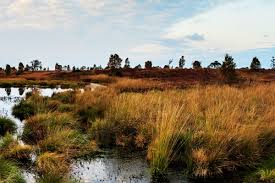
Barlow also mentions another possibility when used in Buddenbrock, -siek, -diek (Westfalen), a place in Bodde = Morast, Schmutz, Modder. This particular use of the name has been recorded as early as the year 950. Still, the soggy swamps on the shore of the Baltic see are called ‘Bodden”. On the map below around the island of Rügen are many ‘bodden”.A significant part of where the Buddes originate from was moor land, with the Bourtanger Moor one of the largest peat environment in north west Europe, so a possible connection with this environment makes sense for the early inhabitants of these lands.
According to the Dutch historian A.van der Plank, the name Budde is of Germanic origin. It is the name of a tribe. The meaning of the name is ‘to order’.
Another interesting detail is that the word ‘bude’ in the Scandinavian languages means: abode, residence or, place of residence. It is the same name as ‘booth’ and comes from the verb ‘bo’ = live at a place. But is pronounced with a soft ‘d’ like ‘boothe’. However, according to Scandinavian linguists, the family name Budde is not from Scandinavian origin.
DNA research clearly shows that the Buddes originated from what is now north western Germany. However, perhaps already much earlier some of them crossed into what is now Denmark and Sweden., again also something visible in our DNA.
Patronymics from Budde are: Budden, Budie, But, Buts, Butte, Buttelins, Butz, Butske. The names can end with -ing, -ingh, -inghe, -n, -mann, -ke and -s. In our direct family tree persons have used the names Budden and Buddeke(n).
According to Dr. Schuette, the name could be generated anywhere as well as at several different places at the same time or at different times. Most early “Buddes” are original ones living at their very own places.
The surname Budde is rare: 1 in 100,000 families. According to the website Forebears (2021), it is the 25, 368th most common name in the world. 21,270 persons bear this name of which 12.000 in Germany, 4.000 in the USA and 400 in the Netherlands.
Budde names across the world – 2021 – Source Forebears.io
| Place | Incidence | Frequency | Rank in Area |
| Germany | 11,989 | 1:6,715 | 826 |
| United States | 4,045 | 1:89,607 | 10,076 |
| India | 3,601 | 1:213,015 | 12,691 |
| Netherlands | 406 | 1:41,594 | 7,055 |
| Denmark | 260 | 1:21,710 | 2,192 |
| Honduras | 123 | 1:71,678 | 1,463 |
| Uganda | 119 | 1:328,061 | 22,062 |
| Brazil | 114 | 1:1,877,845 | 60,321 |
| Canada | 71 | 1:518,952 | 43,932 |
| Australia | 71 | 1:380,221 | 31,281 |
Oldest links
Historical data in relation to the origin of the oldest Budde family member points to the Baltic shores, in the far north of Germany. The first recorded Budde ever is Alard Budde in 1130 in Stralsund – Pommern.
There are also branches of the family around the Baltic Sea. Covering every single country in this region (Denmark, Norway, Sweden, Finland, Estonia, Lithuania, Latvia and Russia).
There are also the Knights Budde. From 1200 till 1600 they were enfeoffed, with castles in Haslage (Osnabrück), Drantum (Melle-Groenenberg), Vechta (near Diepholz) and Hange (near Lingen). Interestingly all within the same geographical DNA area (see below) of the Budde family.
Some of knights moved east to the new lands conquered by the Teutonic Order in what are now the Baltic States. We visited many of these places during our trip in 2002 along the Baltic Sea from Stralsund, Rugen and Greifswald to Saareema (Estonia) and Latvia.
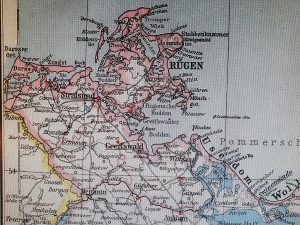
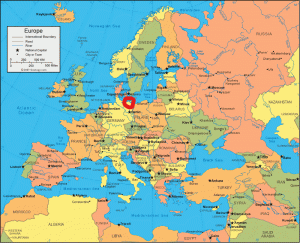
The most famous of them was Matthias Budde (born in Neetzow, Pommern +1591). This is marked on the map to the left with the red dot below Gūtzkow.
In 1584 he became the Danish Stadtholder (Governor) of the island Saaremaa in Estonia. Denmark was around this time at the heights of its powers and occupied both the northern parts of what is now Germany as well as parts of the Baltic.
As the name could have developed at different places and at different time independently, the likelihood of there being a link between the knights and the ordinary folk is close to nil. There was a sharp divide between these classes. Intermingling didn’t take place to the contrary there was a deep contempt for the lower classes.
I have come across the first member of my direct lineage in Wietmarschen a small town in Niedersachsen. There are references to an even smaller township close by, Emsburen, from which, according to church archives, the Buddes originally came from here. This of course would refer to this Budde family only. This relates relate to the 16th and 17th century.
Twice a Gerhard Hermann in our family was to make a major move. The first one started the family branch in Nordhorn (1771 – 1871) the second one, in 1871, the branch in Ootmarsum, Twente (Netherlands). My father moved to Oss in Brabant (Netherlands) and in 1983 I moved from there with my family to Bucketty in Australia.
|
Our branch starting at ca 1620 |
|
| Eilard Buddeken | Wietmarsum |
| Joanna Budde/Conrad Wöste | Wietmarschen |
| Bernardus Budden | Wietmarschen |
| Gerhardus Budde | Wietmarschen/Nordhorn |
| Johann Bernhard Budde (I) | Nordhorn |
| Johann Bernard Budde (II) | Nordhorn |
| Gerhard Hermann Budde | Nordhorn/Ootmarsum |
| Theodorus Cornelis Budde | Ootmarsum |
| Herman Budde | Ootmarsum/Vught/Oss |
| Paul Budde | Vught/Oss/Sydney/Bucketty/Brisbane |
| You | Oss/Sydney/Bucketty/? |
| And You | ? |
This family history was first attempted in 1928 by my grandfather, Theodoor, and later by my father, Herman. The advent of the Internet has now made it a reality.
DNA Research
Introduction
One of the early leaders in DNA research is Bryan Sykes Professor of Human Genetics at the University of Oxford. Separate from his university activities he has set up a company Oxford Ancestors Limited which provide DNA testing facilities for genealogical research. They provide services on:
- Y line the genetic signature of the Y chromosome that you inherit from your father and from more distant paternal ancestors, going back into the ancient past. Others with the surname Budde would of course be a first target for such comparisons.
- MatriLine – a read out of your mitochondria DNA sequence, this allows you to trace back the maternal line. In his book ‘The Seven Daughters of Eve”, Bryan Sykes have discovered that almost every person with its maternal roots in Europe can be traced back one of seven women, living in distinct regions in Europe between 10,000 and 45,000 years ago.
- Linked to the Y-line research, it is also possible to check if there is an ancestral link with the Vikings.
Y line – Paternal Ancestors
I have let my DNA first tested in the early 00s.
My Y-line signature is: 14 – 12 – 23 – 11 – 14 – 13 – 10 – 16 – *M -13
Anybody with a similar paternal ancestry line, should have a similar Y-signature.
They also indicated that there was no evidence of Viking ancestry in my paternal line.
They have come across an unusual’ sequence in my DYS425 DNA band (marker with *M) they have been unable to allocate a specific market. This is a rare result (of course) and occurs from time to time and is part of a natural change that DNA undergoes overtime.
Further clarification was kindly added by Christiaan Heerma van Voss. He indicated that this M* is actually a null reading failure. If this is the case, usually Ftdna expresses this mutation/missing value with a null it should be changed into a null within Y-search. Responsible for this mutation is a mutation at Dyf371.
It is not as uncommon as one might think it is however very characteristic for many subhaplogroups. The one I belong to is probably z326+. It is downstream of U106->L48->Z9&Z10->Z326.
He indicated that I even belong to a particular cluster of z326, which for now he calls the Nordic or North Sea-cluster, because of the predominantly Nordic context. He is not sure if this cluster emerged in Norway or came from the Dutch-German coast. Frisian, Dutch and Northern German merchants might have brought it to the Nordic contexts during the Hansa period or in case for the Frisians even during the Viking period.
Characteristically markers for z326 are these values:DYS390=23, DYS447=24,
DYS460=10, DYS425=null and A10=12
In addition my cluster has these typical values:426=13,449=27:
Since that time DNA research has improved significantly and far more details are now becoming more and more available.
MatriLine
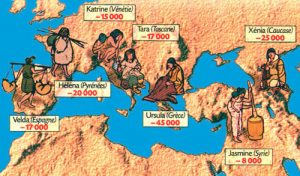
The Matraine DNA result indicated that from my mother side I relate back to the daughter Sykes named Ursula.
Ursula (Latin for she-bear) lived about 45,000 years ago in what is now northern Greece. She was among the first arrivals of a new, modern human to set foot in Europe. She was slender and graceful, in marked contrast to the thickset Neanderthals with whom she and her clan shared the land for another 20,000 years. Her kind brought with them a new and more sophisticated type of stone tool with which to hunt and butcher the abundant game, animals that soon appeared on the walls of limestone caves as the first expression of human art. They spread right across Europe, west across France and north as far as the British isles.
As the climate deteriorated 25,000 years ago, the clan began its long migration south; eventually reaching Spain and founding what became a refuge for all humans during the coldest millennia of the
last Ice Age. As the climate warmed, the scattered clan led the march back to the north to reclaim the once frozen lands. They reached the British Isles and left an indelible record in the limestone caves of Cheddar Gorge. In 1998, DNA was recovered from the famous skeleton known as Cheddar Man and their analysis showed that it belonged to the clan of Ursula. In a dramatic demonstration of genetic continuity, they found that a teacher at the local school, only a few hundred yards from the cave entrance, was clearly a member of the same clan.
Once the Ice Age ended people started to move north and most likely that is how our ancestors ended up in north Germany..
DNA research Ancestry.com
In 2016 I also had my DNA tested by Ancestry. The results were very interesting as it matches the history of the Buddes as far as I have been able to trace them. However, while I did found a lot of concentration around the Baltic Sea, I couldn’t conclude from what side of the area the Buddes originated , northern Germany or Scandinavia. Over the years Ancestry has been able to update my DNA data, with more and more people in their data base and new DNA technologies they have fine tuned the information and it looks like that our family has been living in north Germany for a very long time. This is the latest update from September 2021.
Looking at the last 10,000 years these are the results
- Germanic Europe 49%
- Sweden & Denmark 26%
- Norway 17%
- England & Northwestern Europe 6%
- Ireland 2%
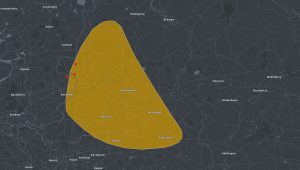
Within Northwest Germany the region where we come from is Münsterland-Emsland. This covers places like Wietmarschen, Nordhorn as well as Ootmarsum, so a perfect fit! It also covers the area where still most of the 12,000 Buddes in Germany live.
Websites
Rugen: http://www.ruegen-web.de/
Straelsund: http://www.deutsche-staedte.de/stralsund/index.html
Kurzeme: http://www.baltische-ritterschaften.de/genoesel.htm#GHdA
History Denmark: http://www.um.dk/english/danmark/danmarksbog/kap6/6-4.asp – 22k
Saaremaa: www.saaremaa.ee
Map Pommeren: http://feefhs.org/maps/gere/ge-pomer.html
History Kurzeme: http://pagan.drak.net/wwcrew/paganism.html
Saaremaa (Baltic nobility): http://mdz1.bib-bvb.de/cocoon/baltlex/Band_bsb00000345.html
What’s next?
Hopefully the information in this data base will lead to further findings. Contributions from you, the reader as well as from others, are very much appreciated. These will be updated on our website: https://paulbuddehistory.com The Internet has played an important role in the research that have led to this publication. It has brought people in four countries together (Netherlands, Germany, USA, Australia). A special word of thanks to my German friends and researchers the late Rolf Suewolto and Falk Liebzeit, for the invaluable contributions they have made.
I would like to invite anybody who has information relevant to the Budde family to let me know and perhaps together we can further piece this history together. I will be using the News link as a bulletin board for news updates, inquiries, etc.
Paul Budde